


How to Sign Documents with Advanced Electronic Signatures Using EzSignly
March 4, 2026 | Posted By Admin
Secure Best E-Signature Solution For Legal Business
Summary
Signing documents digitally is no longer optional,
it’s the smart standard. Whether you’re an HR professional streamlining
onboarding, a lawyer securing agreements, or a business owner cutting costs,
Advanced Electronic Signatures offer legally binding security at a fraction of
traditional effort. Discover how modern eSignature software in Illinois
and across the USA is transforming how deals get done.
The New Standard in Document Signing: Why Going Digital Just Makes Sense
Picture this: You’re an HR manager at a growing
company in Chicago. You’ve just found the perfect candidate, but instead of
sending a clean digital offer letter, you’re printing, scanning, chasing
physical signatures, and waiting days. Meanwhile, your candidate accepts an
offer elsewhere. Sound familiar? That frustration is exactly why Advanced
Electronic Signatures, which Illinois businesses rely on, have become
mission-critical tools in 2025 and beyond. From solo attorneys to mid-sized
enterprises, the shift to digital signing is reshaping how work gets done:
faster, cheaper, and more securely than ever.
Key Takeaways
- Advanced Electronic Signatures (AES) provide a higher tier of authentication than basic e-signatures, making them ideal for sensitive business, legal, and HR documents.
- Illinois fully recognizes electronic signatures under the Uniform Electronic Transactions Act (UETA), adopted in 2021, giving your digitally signed documents complete legal standing.
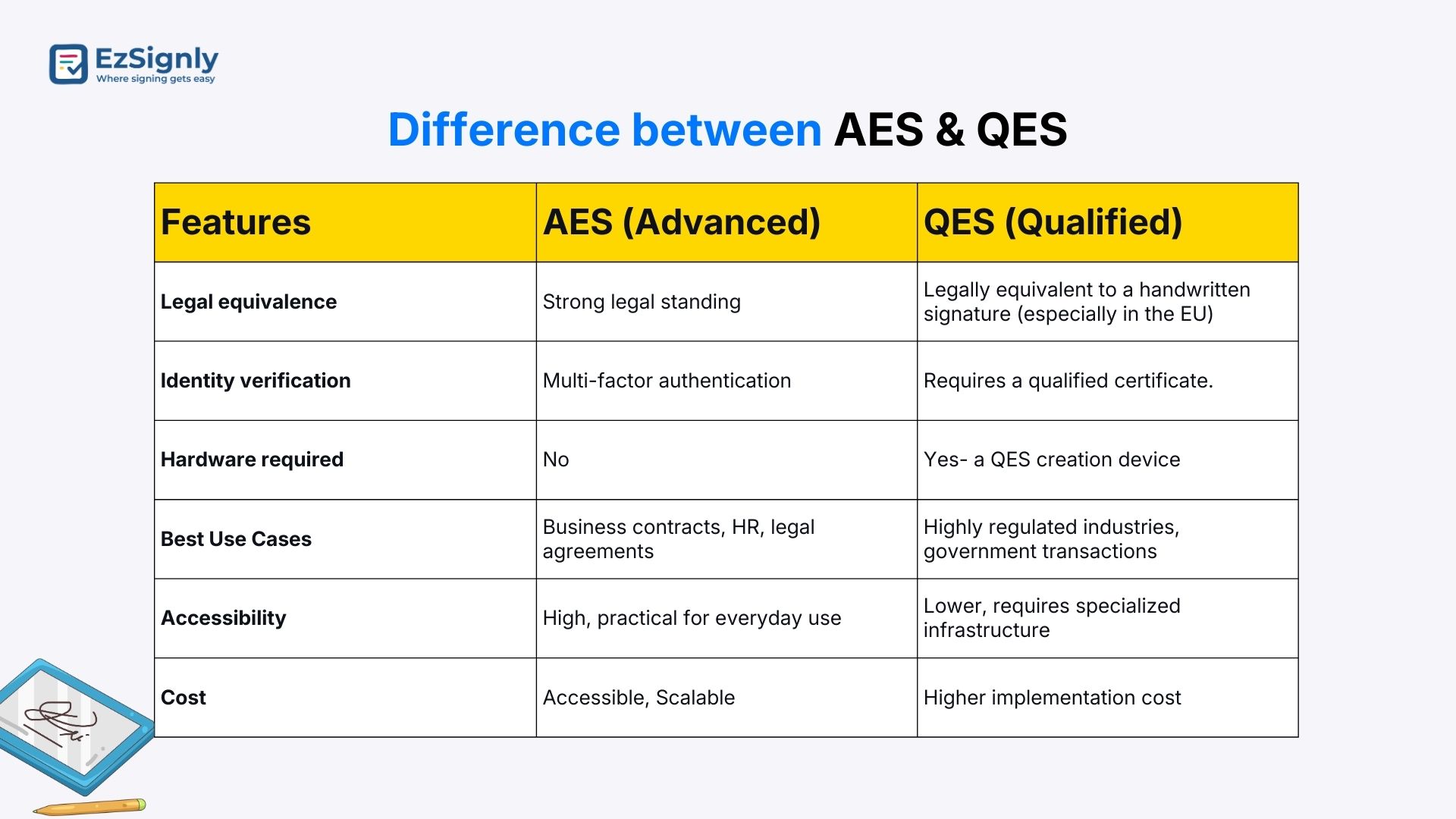
- AES differs from QES (Qualified Electronic Signatures) in terms of required infrastructure; AES is more accessible and cost-effective for everyday business use.
- The Best Electronic Signatures software for HR combines audit trails, multi-party signing, and seamless integrations to eliminate paper-based bottlenecks.
- Using the right online eSignature for business can save companies an estimated $36 per agreement in operational costs.
- Legally binding eSignatures are valid for most employment contracts, NDAs, vendor agreements, service contracts, and more.
- E-Signature
at a Lower Price is now a real possibility, and
modern platforms offer enterprise-grade security without the
enterprise-grade price tag.
What Is an Advanced Electronic Signature?
Not all e-signatures are created equal. There are three widely recognized tiers:
- Simple Electronic Signature (SES): A basic click-to-sign or typed name. Works for low-risk, informal agreements.
- Advanced Electronic Signature (AES): Uniquely linked to the signer, capable of identifying them, created using data under their sole control, and detects any post-signing alterations. This is the sweet spot for most business and legal use cases.
- Qualified Electronic Signature (QES): The most rigorous tier, equivalent to a handwritten signature by law in the EU, requiring certified hardware devices. Best for highly regulated, high-stakes transactions.
For the vast majority of online eSignature for
business needs- contracts, employment documents, client agreements- an
Advanced Electronic Signature hits the ideal balance between strong identity
verification and practical accessibility. It doesn’t require specialized
hardware, yet it offers significantly more security and evidentiary value than
a simple e-signature.
Best E-signature Software
Is Illinois E-Signature Friendly?
A common question is: Does Illinois accept electronic signatures? The short answer is a confident yes.
Illinois adopted the Uniform Electronic Transactions Act (UETA) in June 2021, making it the 49th state to do so, bringing it fully in line with the federal ESIGN Act. Before 2021, Illinois operated under its own Electronic Commerce Security Act (ECSA).
There are a few exceptions (such as wills, powers of
attorney, and certain property rights instruments). Still, for the overwhelming
majority of business and professional use cases, eSignature software in
Illinois is fully enforceable. Illinois courts also affirm this. Our
platform provides legally binding and compliant eSignatures for all Illinois
businesses. Under UETA and ESIGN, Legally binding eSignatures carry the same legal weight as pen-on-paper signatures for most documents,
including contracts, HR agreements, vendor terms, and legal filings.
Electronic Signature for Lawyers
For the legal profession, precision and authenticity are non-negotiable. An Electronic Signature for Lawyers isn’t just about convenience; it’s about creating an unassailable record of consent and identity.
Advanced Electronic Signatures address this directly. Every signed document generates a tamper-evident audit trail that records the signer’s email address, IP address, timestamp, and device details. If a signature is ever challenged in court, this data serves as verifiable proof that the right person signed the right document at the right time, and that no alterations were made afterward.
Law firms using digital signature services also benefit from:
- Faster turnaround on retainer agreements, settlement documents, and NDAs
- Remote signing capabilities that serve clients across geographies without requiring in-person meetings
- Secure cloud storage that eliminates the risk of misplaced paper files
- Cost efficiency, a genuine E-Signature at a Lower Price compared to the expense of courier services, physical storage, and administrative labor
Whether you’re managing a solo practice in Springfield
or a multi-partner firm in Chicago, integrating eSignature on document
workflows positions your practice for the speed and scale modern clients
expect.
eSignature Advantages for HR Documents
HR teams are among the heaviest users of documentation in any organization, and among the greatest beneficiaries of going digital. From onboarding packets and policy acknowledgments to performance reviews and separation agreements, eSignature for HR documents streamlines every touchpoint.
Here’s how advanced digital signing changes the game for HR:
- Faster Hiring Cycles
Top talent doesn’t wait. Once offer letters can be sent and returned digitally in minutes, businesses secure them before rivals can even pick up the phone. Research indicates digital workflows can reduce onboarding times by up to 80%.
- Ironclad Compliance
Labor regulations require accurate, verifiable records. Legally binding eSignatures automatically generate audit trails, ensuring that every acknowledgment, from FMLA notices to confidentiality agreements, is timestamped and traceable.
- Support for Remote and Distributed Teams
- Hybrid work is the norm. HR professionals managing employees across multiple states or countries need an eSignature solution for PDFs or documents that works seamlessly across devices, time zones, and jurisdictions.
- Scalability Without Added Headcount
High-growth companies processing hundreds of documents
per month simply can’t afford manual execution bottlenecks. Digital workflows
let HR teams handle high-volume document cycles with standardized templates,
automated reminders, and bulk sending, without adding administrative staff.
Signing Documents with EzSignly
Among the growing landscape of free online e-signature software and premium platforms, our software stands out as a purpose-built solution that makes Advanced Electronic Signatures accessible, affordable, and legally compliant for businesses of all sizes across the USA.
Here’s what a typical signing workflow looks like:
Step 1: Upload Your Document
Drag and drop your contract, HR form, NDA, or PDF directly into the platform. EzSignly supports all major document formats, making it one of the most flexible tools for eSignature on PDF workflows.
Step 2: Add Signers and Fields
Designate each signer’s role, assign signature fields, initials, dates, and any required data fields. Multi-party and sequential signing is fully supported, critical for agreements that require approvals in a specific order.
Step 3: Send and Track in Real Time
Recipients receive an email with a secure signing link, no account creation is required on their end. Real-time tracking lets you see exactly where each document stands, and automated reminders follow up with anyone who hasn’t yet signed.
Step 4: Receive Signed Documents with Full Audit Trail
Once all parties have signed, completed documents are
delivered with a comprehensive audit trail, capturing IP addresses, timestamps,
and device information. This is what elevates the platform from basic digital
signing free tools to a genuinely secure, enterprise-grade solution.
The Cost Advantage: E-Signature at a Lower Price
Think of all the hidden costs of paper-based signing, such as printing, couriers, administrative staff chasing signatures, storage, and waiting for documents to come back.
Research has shown that businesses can save an average of $36 per document by adopting digital signing. This is significant for a business that signs hundreds of contracts each month, resulting in tens of thousands of dollars in annual savings.
Modern digital signature services now offer
tiered pricing models, including free-to-start plans- making it possible for
small businesses, freelancers, and solo practitioners to access the same level
of security and compliance as large enterprises. Choosing the Best
Electronic Signature software for HR doesn’t have to break the budget. The
right platform provides audit trails, legally binding validity, and seamless
integrations at a price point that won't burn a hole in your budget.
Final Thoughts
Whether you’re running a busy HR department, a law practice, or simply trying to close deals as quickly as possible as a business owner, Advanced Electronic Signatures are a necessity for staying competitive. Illinois businesses, in particular, are in an excellent position, operating under a clear, UETA-aligned legal framework that fully supports digital signature services across virtually every professional context.
The right eSignature platform in the USA makes
the process effortless: upload, assign, send, and receive, with a legally
airtight record at every step. And with platforms now offering enterprise-level
features at accessible price points, there’s never been a better time to leave
the printer behind for good.
FAQs
1. Does Illinois accept electronic signatures?
Yes, absolutely. Illinois adopted the Uniform Electronic Transactions Act (UETA) in June 2021, formally recognizing electronic signatures as legally valid and enforceable for most business and legal purposes. Combined with the federal ESIGN Act, digital signatures in Illinois carry the same legal weight as traditional handwritten signatures for contracts, HR documents, commercial agreements, and more.
2. What is an advanced electronic signature?
An Advanced Electronic Signature (AES) is a step above a basic e-signature. It must meet four key criteria: First, it has to be associated with the signer. Second, it must be
able to identify the signer. Third, it must be created using data under the sole control of the signer. Finally, it must be able to detect changes to the document made after signing.
3. Is Illinois a no-ESIGN state?
Not anymore. Illinois previously had its own framework, the Electronic Commerce Security Act (ECSA), leading some to classify it differently from UETA-adopting states. However, in June 2021, Illinois became the 49th state to adopt the UETA, formally repealing the ECSA.
4. What is the difference between QES and AES?
The key distinction is that a QES is essentially an
AES plus a qualified certificate issued by a certified trust service provider,
created on a qualified signature creation device.
Take a look at the latest blog
What is the Purpose of Digital eSignature Software for Your Business?
In today’s always-on business environment, speed, security, and simplicity define success. If your company still relies on printing, scanning, and cou...
January 28, 2026
The Future of eSignatures in 2026: How EzSignly Is Redefining Digital Trust
EzSignly leads the 2026 eSignature era with smarter security and digital trust.
January 27, 2026
EzSignly: Electronic Signature Software to Sign Any Document with Confidence
electronic signatures matter today, how they transform everyday operations, and what makes modern eSignature adoption a smart business move rather tha...
January 22, 2026
How to Empower HR Operations with Document eSignatures Using EzSignly
An eSignature is not just a digital scribble on a screen. In HR, it’s a legal, secure way for signing any employment document online, anywhere, anytim...
January 13, 2026
Have any other questions? EzSignly's team is here to help!
© 2026 Copyright EzSignly. All Rights Reserved