


Legally Valid Electronic Signatures: What Businesses Need to Know
January 30, 2026 | Posted By Admin
Posted By: Admin
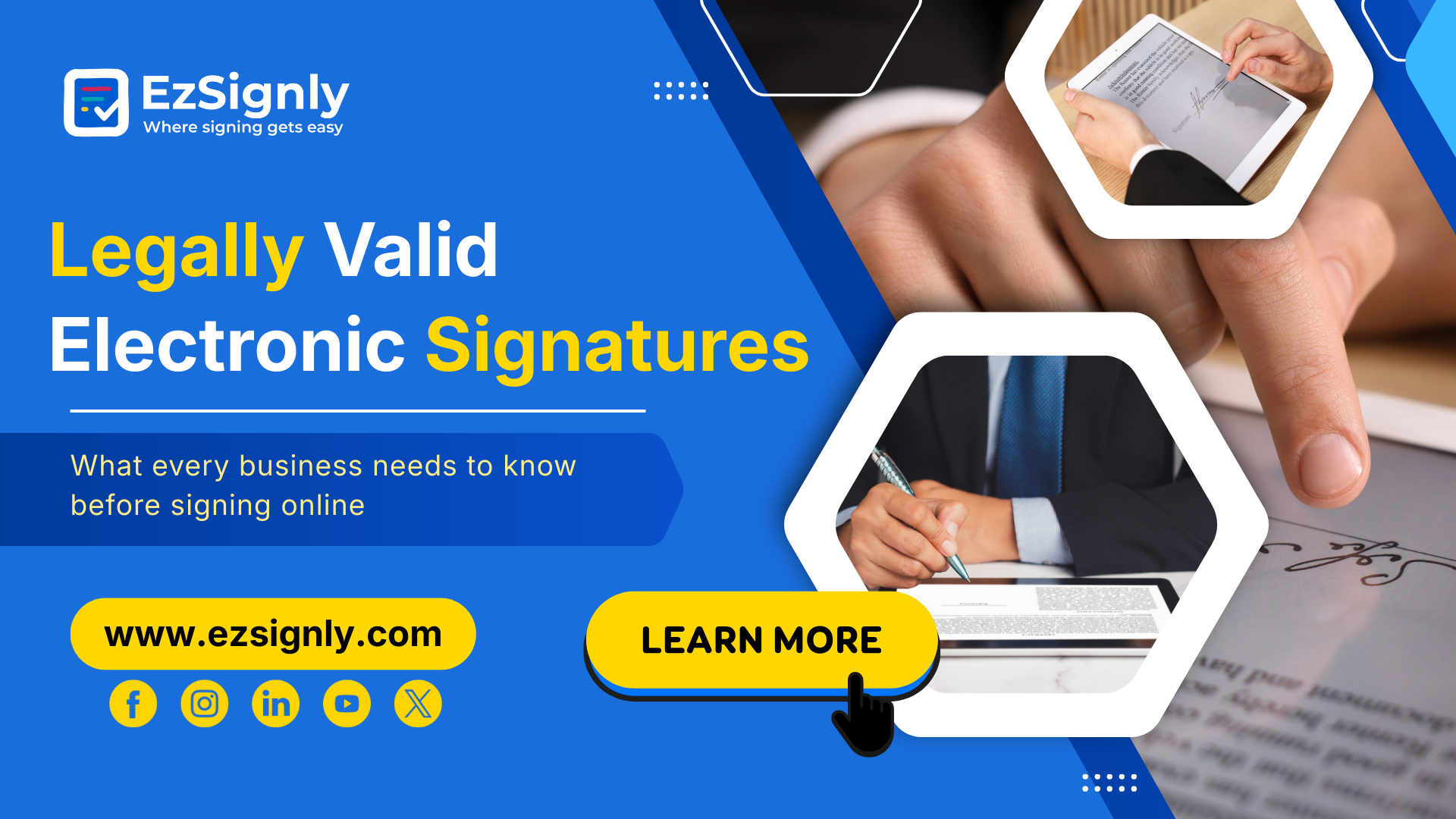
Legally Valid Electronic Signatures
In today’s digital-first business environment, contracts and approvals need to move as fast as decision-making. Paper-based signing slows teams down, increases errors, and makes compliance harder to manage, prompting teams to move towards electronic document workflows.
The driving force behind this paradigm shift is the electronic signature. The e-signature enables you to sign and manage documents online while offering legal validity, rock-solid security, and compliance.
A perfectly executed e-signature has precisely the same legal standing as a “wet ink” signature. But it also has a transparency and speed that paper cannot provide.
This guide will walk you through all the elements you
must understand and master to confidently navigate the realm of legally binding electronic signatures.
Why Businesses Use Legally Valid Electronic Signatures
- Execute contracts faster without printing or scanning
- Ensure signatures are legally binding and enforceable
- Protect documents with encryption and tamper-proof audit trails
- Stay compliant with global electronic signature laws
- Reduce
paperwork, storage, and operational costs
What Exactly Are Legally Valid Electronic Signatures?
An electronic signature is like a legal understanding that is accepted and honoured by the law.
An electronic signature is an approach used to authenticate a person's consent to sign a document as a result of a procedure that is documented electronically.
There is no need for scanning, pens and paper. The
e-solutions ensure there is a verified signature and registration of consent on
the part of those who sign. This online document signing solution has an equal
legal aspect to a pen and paper signature on a paper document, as per the law.
Why the Business World Is Ditching Paper
The move away from paper isn't just a trend; it's a practical evolution. Here is why businesses are making the switch:
- Deals Close Faster: You can finalize contracts in minutes. No more waiting days for a courier or someone to find a working scanner.
- Operational Agility: Your team can manage approvals and contracts from anywhere in the world, reducing human error and administrative bottlenecks.
- Lower Overheads: When you cut out paper, ink, postage, and physical storage, the savings hit your bottom line almost immediately.
- A
Better Client Experience: Your partners and
customers will thank you for the convenience. You give them a smoother and
simpler experience.
Are eSignatures Legally Enforceable?
The short answer is: Yes. In most parts of the world, electronic signatures are fully enforceable as long as they meet a few core criteria:
- The signer clearly intended to sign.
- There was consent to conduct the business electronically.
- The signer's identity can be verified.
- The record of the signing is kept untampered and secure.
When implemented correctly, legally valid
electronic signatures provide the same legal standing as traditional
signatures while offering greater speed, transparency, and control.
The Legal Framework: Global Recognition
There are several laws which provide the pillars behind eSignatures around the world.
- United States: The ESIGN Act and UETA ensure that e-signatures are valid for the vast majority of business and consumer deals.
- European Union: The eIDAS Regulation sets a high standard for recognition across all EU member states.
- India:
The Information Technology Act provides the legal framework for
digital and electronic signatures.
What Makes a Signature Legally Binding?
All digital signatures are not equal. To protect your work from being contested in court, commercial-grade digital signature solutions rely on these four corners:
1. Authentication: Authentication involves attempting to ensure the actual signer is who he or she claims to be, typically through the use of email or an ID.
2. The Audit Trail: A "digital log" that records each signing with details of who signed, where, and when.
3. Document Integrity: The process of ensuring that the document is “sealed” after signing so it cannot be altered.
4.
Secure Storage:
Storing the signed copy of the agreement in a digital vault.
Real-World Use Cases of Legally Valid eSignatures
Here are the various use cases for eSignatures. They are versatile, efficient and indispensable in today's business landscape.
- Sales: Securing sales and accepting proposals in an instant.
- HR: HR managers use it to send and track onboarding documents.
- Legal: NDA management, internal compliance with a clear "paper trail
- Finance:
Simplifying vendor contracts and approval of bills.
The Hidden Benefits of eSignature Software
eSignature software offers various positive outcomes beyond the obvious.
- Consistency: Every department follows the same secure process.
- Compliance: Built-in tools help you meet industry-specific regulations automatically.
- Visibility:
You can see exactly where a document is in the process and who still needs
to sign.
eSignature Best Practices for Your Business
To get the most out of this technology, keep these tips in mind:
- Always inform your signers that you are using electronic signatures.
- Choose an eSignature software provider that makes sure of enterprise-grade security.
- Set clear internal rules for who has the authority to sign what.
- Keep
your digital audit trails organized for future reference.
Addressing the Skeptics
It’s normal to have questions about new tech:
- Is it secure? Yes, modern platforms use bank-grade AES-256-bit encryption that is often much safer than an unmonitored filing cabinet.
- Will courts accept it? Absolutely. Electronically signed documents are a staple in modern legal proceedings.
- Can
I use it for everything? Though most
business documents can be signed online, there are a few important ones
(like particular wills or court orders) that may still require traditional
methods depending on your location.
Looking Ahead
The digital shift is not slowing down. With more and
more companies embracing remote work and international trade, the need for
secure and legal e-signing will only continue to increase. Businesses that are
leading the revolution with this technology are not only cutting down time,
they’re also carving the path for an even faster future.
Final Thoughts
Legally valid electronic signatures have moved from a "nice-to-have" to a business essential. They offer the appropriate blend of speed and security, minus the headaches of old-school paperwork.
With the help of a trusted eSignature partner like EzSignly, one can modernize the operations, stay future-ready, and have total peace of mind.
Take a look at the latest blog
End-to-End Employee Lifecycle Management with EzSignly eSignature Platform
Manage the complete employee lifecycle—from onboarding to exit—using EzSignly’s secure, paperless eSignature platform.
March 2, 2026
The Legal Validity of eSignatures: Laws, Compliance, and Use Cases for South Barrington Businesses
A common concern among Illinois business leaders is whether electronically signed documents will hold up if challenged. For organizations using a digi...
February 6, 2026
eSignature Trends in India: What Businesses Need to Know in 2026
In 2026, eSignatures in India enable faster, secure, and legally compliant digital agreements for businesses.
February 10, 2026
From Listings to Closings: Why Real Estate Businesses Need eSignatures in 2026
In 2026, eSignatures help real estate businesses close deals faster, cut paperwork, and deliver a seamless client experience.
February 26, 2026
Have any other questions? EzSignly's team is here to help!
© 2026 Copyright EzSignly. All Rights Reserved